What Matters to You? Living a Value-Aligned Life

Have you ever found yourself working toward a goal and suddenly wondering, Why am I doing this? Maybe you have spent years pursuing a particular career, trying to reach a certain level of financial success, maintaining relationships, or checking off milestones because they seemed like the things you were supposed to want. Yet, when you stop and think about it, you may not be sure whether those things actually reflect what matters most to you.
Many of us spend a lot of time thinking about what we should accomplish, who we should be, and what our lives should look like. We may focus on goals without taking much time to consider the values underneath them. Understanding your values can help you step back from those expectations and consider a different question: What do I want my life to stand for?
Living a value-aligned life does not mean making perfect choices or having everything figured out. Instead, it means intentionally making choices and taking actions that reflect what is genuinely important to you.
What Are Values?
In Acceptance and Commitment Therapy (ACT), values are understood as ongoing directions that reflect what matters to us and the qualities we want to bring into our lives. They are different from goals because they are not something we eventually accomplish and check off a list.
For example, being a supportive partner can be a value, while planning a date with my partner this weekend is an action that reflects that value. Being curious can be a value, while taking a class is a goal or action that allows you to express that value.
Some examples of values might include:
Connection
Compassion
Creativity
Growth
Adventure
Integrity
Family
Community
Learning
Independence
Authenticity
Kindness
There is no universal list of values that everyone should have. What matters deeply to one person may not be as important to someone else. Values are personal, and understanding yours requires looking beyond what you have been told you should care about.
Where Did Your Values Come From?
It can be easy to assume that our values are simply an internal reflection of who we are. In reality, our understanding of what matters is shaped by many of the environments we grow up and live in.
From an early age, we receive messages from our families, schools, communities, relationships, social media, and broader culture about what makes someone successful, respectable, desirable, or worthy. We may learn that a successful person has a particular career, that family should always come first, that we should prioritize financial security, or that being a good person means always being available to help others.
We may also receive messages about what our lives are supposed to look like. We might feel pressure to get married, have children, own a home, advance in our careers, maintain a certain appearance, or constantly be productive. Social media can add another layer by giving us an ongoing stream of examples of what other people's lives appear to look like.
None of these things are inherently bad. Having a successful career, building a family, helping others, or wanting financial stability can all be deeply meaningful values for some people. The important question is whether they are meaningful to you.
Sometimes, what we think of as our values are actually expectations we have absorbed over time. We may pursue something because we believe we are supposed to want it, without ever stopping to ask whether it is consistent with the life we actually want.
Values vs. "Shoulds"
One way to begin noticing the difference is to pay attention to the language you use when making decisions.
Consider the difference between:
“I want to…”
and
“I should…”
“I’m supposed to…”
“A good person would…”
“By this age, I should have…”
“Everyone else is doing…”
A “should” does not automatically mean that something is inconsistent with your values. Sometimes our values and our responsibilities overlap. However, noticing the “shoulds” in your life can create an opportunity to become curious about where those expectations came from.
You might ask yourself:
If nobody else knew about this decision, would I still want it?
Am I pursuing this because it matters to me, or because I am afraid of disappointing someone?
What am I hoping this accomplishment will give me?
Would I choose this if I were not comparing my life to anyone else's?
Does this reflect the person I want to be, or the person I think I am supposed to be?
These questions are not meant to help you reject every expectation or responsibility in your life. Instead, they can help you become more intentional about which expectations you want to keep and which ones may no longer fit.
How Do You Know What You Value?
Identifying your values is not always easy. If you have spent years responding to other people's expectations or trying to meet a particular definition of success, you may not immediately know what genuinely matters to you. That does not mean you do not have values. It may simply mean that you have not had much opportunity to intentionally explore them.
One place to start is by paying attention to what makes you feel most engaged, connected, or like yourself. When do you feel a sense of purpose? What activities leave you feeling energized or fulfilled? You can also notice what consistently frustrates, upsets, or disappoints you. Sometimes our strongest reactions can point us toward something we care deeply about. If unfairness is particularly difficult for you to tolerate, for example, fairness or justice may be important to you. If feeling disconnected from other people is especially painful, connection may be one of your values.
It can also be helpful to look beneath your goals. Ask yourself why something matters to you. Wanting a promotion is a goal, but what does that promotion represent? Perhaps it represents growth, accomplishment, financial security, leadership, recognition, or contribution. The goal itself may change over time while the value underneath it remains important.
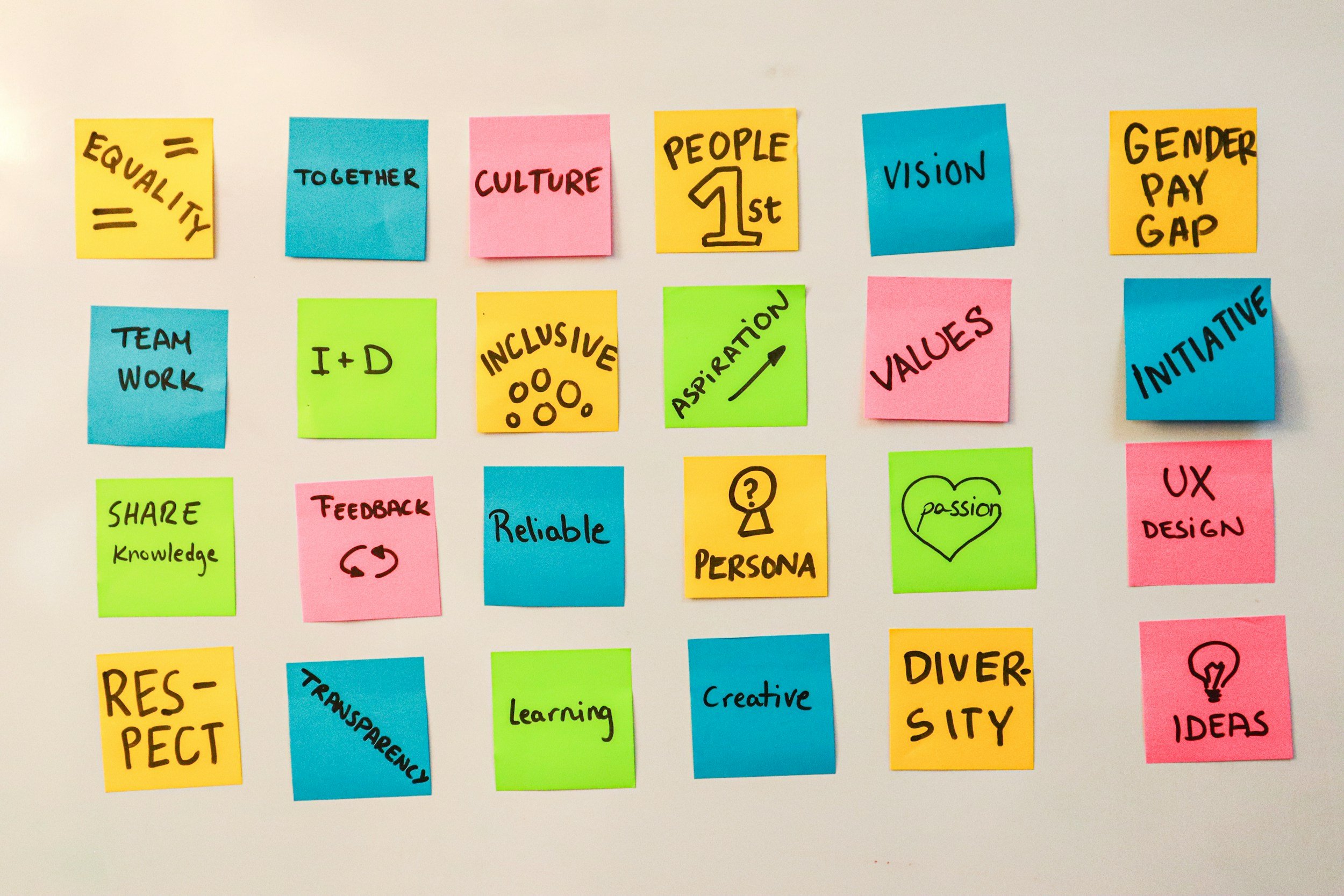
If you are having difficulty identifying your values or simply want more clarity, a values card sort can be a useful place to begin. Values card sorts provide a collection of words or concepts related to different values and invite you to sort, prioritize, and reflect on the ones that feel most meaningful to you. The exercise is not about finding the “correct” values. Instead, it can give you language for things that matter to you and help you begin noticing which priorities feel personally meaningful versus which ones may have been shaped primarily by outside expectations.
Living According to Your Values
Once you have identified what matters to you, the next step is figuring out how to bring those values into your everyday life. Values become meaningful through action.
Living a value-aligned life does not mean making perfect decisions or completely changing your life overnight. It also does not mean that difficult emotions will disappear. In fact, living according to your values sometimes means being willing to experience discomfort in service of something that matters.
If connection is important to you, you may need to have a difficult conversation. If growth matters to you, you may need to tolerate feeling inexperienced or uncertain. If authenticity matters to you, you may sometimes have to make choices that other people do not understand.
Instead of asking yourself, “What is the perfect decision?”, it can be helpful to ask, “What choice moves me in the direction of the person I want to be?”
You can start small. Choose one value and consider one action you could take this week that reflects it. If connection matters, reach out to someone you care about. If creativity matters, make time to create something. If compassion matters, notice how you respond to yourself when you make a mistake. If community matters, look for one small way to contribute.
You do not need to completely redesign your life to begin living more intentionally. Small, repeated choices can create a life that increasingly reflects what matters to you.
You Do Not Have to Figure It Out Alone
Sometimes identifying your values is difficult precisely because there are so many competing expectations, responsibilities, and messages about what your life should look like. It can be difficult to distinguish between what you genuinely value and what you have learned to value.
Therapy can provide a space to slow down, explore where those expectations come from, and become more intentional about the life you want to create. A therapist can also help you translate your values into practical strategies and actions, particularly when fear, self-doubt, difficult emotions, or other obstacles make it challenging to live according to what matters to you.
The goal is not to create a perfect life. It is to develop a clearer sense of what you want your life to stand for and find ways to move in that direction.
At Authentic Connections Therapy and Wellness, our therapists can help you identify and clarify your values, understand what may be getting in the way of living according to them, and develop strategies that honor what matters most to you. Therapy can be a space to create a life that feels more intentional, meaningful, and aligned with who you want to be.
Individual Therapy in Denver, Colorado
When you’ve spent years working toward what you’re “supposed” to want, it can be hard to tell which goals are truly yours. Living a value-aligned life doesn’t mean having everything figured out or making perfect choices. It means getting curious about where your expectations came from and choosing, one small step at a time, a direction that reflects what matters to you. Therapy can offer a space to slow down, clarify your values, and work through the fear, self-doubt, or difficult emotions that can make it hard to live by them.
Our clinicians at Authentic Connections Therapy and Wellness provide individual therapy for adults who want to move from “shoulds” toward a more intentional, meaningful life, so you can feel truly heard and supported in creating a life that feels like your own.
Here’s how to get started:
Get to know our clinicians and their specialties: Meet our team here to find the right fit for you.
Learn about our approach: Read more about individual therapy at ACTW.
Reach out: Schedule a free phone consultation. You don’t need to have it all figured out before you contact us.
Available in person at our Denver Tech Center, Lower Highlands, and Colorado Springs offices, and virtually throughout Colorado.
We hope to hear from you soon.