Dr. Brittany Woolford

At a Glance
Rate: $250 50-minute individual session, $275 50-minute couples session
Offices: Denver Tech Center & virtual (Colorado + PSYPACT states)
Insurance: Out of network superbills provided; [Aetna in-network, if applicable]
License: Licensed Psychologist, CO PSY.0005317 (verify)
Profiles:Psychology Today · TherapyDen
About me and What shapes my work?
I became interested in relationships early on while growing up in a military town, where I saw how deployments, transitions, and high-stress roles shaped families and intimate partnerships. There was often a strong emphasis on independence, the idea that you should be able to handle things on your own, yet I kept noticing how deeply people were still impacted by their relationships. That contrast stayed with me. It led me to become curious not just about why relationships matter so much, but how people can feel more secure, understood, and connected within them, especially when life has required them to be self-reliant.
These experiences shaped both my research and educational pursuits. I’ve spent much of my training and career focused on understanding attachment and how it shows up in modern relationships—whether that’s in dating, long-term partnerships, or during transitions like breakups and divorce. This influenced my belief that relationships are at the root of most mental health distress, and therefore my work with clients revolves around how to create healthier relationships.
Specialization & Approach
I work with individuals and couples who feel stuck in recurring relationship patterns in dating, long-term partnerships, or during major transitions like breakups or divorce. My focus is on helping clients understand the deeper attachment dynamics driving these patterns and creating meaningful, lasting change. I strive to find a balance between deep insight-oriented work and clear action items so that you not only learn about yourself and your relationships, but also how to take action towards changing those patterns. Below are the modalities I use in therapy to help create change:
Attachment-based and psychodynamic therapy: to understand your family, relationships, and experiences that create the road map to who you are today, so you can recognize the patterns that are keeping you stuck.
Internal Family Systems (IFS): to help you understand the different parts of yourself that work to protect you and keep you from the relationships you want.
EMDR: to process underlying trauma this is impacting current relationships and to rewire your brain from protection to connection.
Emotionally Focused Couples Therapy (EFT – trained): to understand your attachment history and how this impacts your relationship dynamics so that you and your partner stop getting stuck in the same cycle.
Gottman Method (Level 1 & 2): to improve communication, manage conflict, and strengthen relational foundations.
Training, Credentials, and Clinical Work
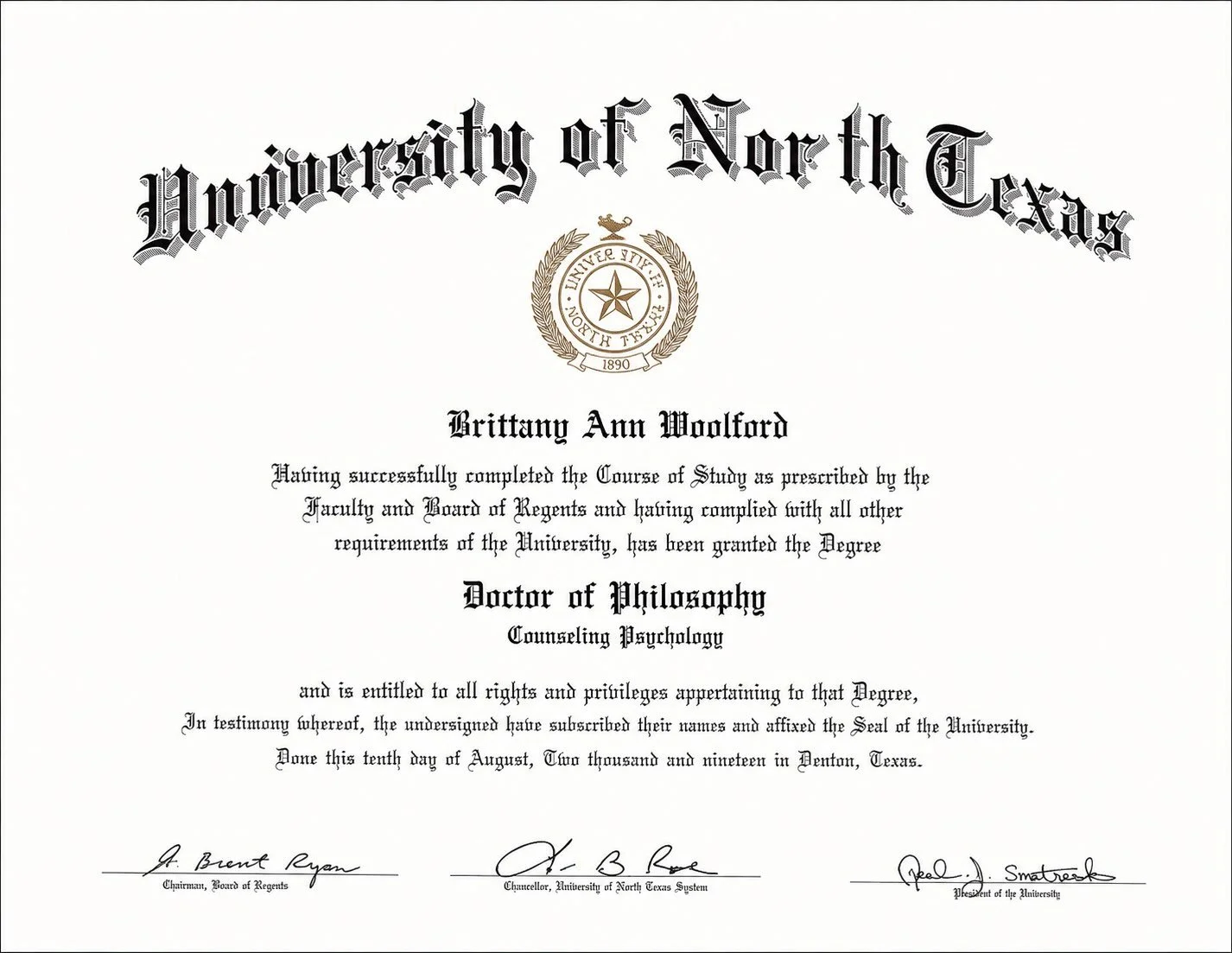
I hold a Ph.D. and M.S. in Counseling Psychology from the University of North Texas and am a Licensed Psychologist in Colorado PSY.0005317 (Verify my license). I have advanced training in EMDR, Emotionally Focused Couples Therapy and the Gottman Method (Levels 1 & 2).
My academic work has focused on attachment and modern relationships, including research on attachment styles in online dating, social media, and relationship satisfaction.
In addition to my clinical work, I am a co-owner of Authentic Connections Therapy and Wellness, teach couples-focused graduate coursework at the University of Denver, and provide supervision to early-career therapists. These roles keep me actively engaged in current research and evolving clinical approaches.
Who I Work Best With
I tend to work best with clients who are:
Noticing repeated patterns in dating or relationships
Moving through a breakup or divorce and wanting to learn from their past so they don't repeat it in the future
In a relationship that feels stuck in conflict or disconnection
Feeling uncertain in their relationship and wanting to feel more grounded in themselves and what they want
What Therapy Looks Like
My approach is collaborative, direct, and focused on both insight and change. Together, we work to understand how your past experiences shape current relationships while building new ways of communicating, relating, and making decisions. Clients leave therapy better understanding themselves, their reactions, and having more language to describe what they're experiencing. They have more confidence in their ability to make different choices than they have in the past and not continue the cycles from their family and their past.
Next Steps
If you’re looking to better understand your past, heal and not feel reactive in your current life, and feel confident in your ability to create and maintain connected relationships feel free to schedule a consultation with me below.
Media, Publications & Podcast Features
-
![Cosmopolitan Magazine]()
How to Have a “Friends With Benefits” Conversation That Doesn’t Blow Up
-
![Readers Digest]()
How to Maintain a Good Relationship with Your Parents as You Get Older
-
![Toronto Sun Newspaper]()
Introducing the 30-minute rule
-
![Real Simple Magazine]()
Gen Z Is in a "Crush Recession"—Here's What That Actually Means for Relationships Today
-
![Vice Magazine]()
The Turbulence Test Can Expose a Relationship Red Flag You’ve Been Missing. Here’s How to Do It.
-
![Vice Magazine]()
The ‘Zombieing’ Dating Trend Is Exactly as Annoying as It Sounds (And Experts Say It’s a Major Red Flag)
-
![Yahoo!life Magazine]()
Gen Z Is in a "Crush Recession"—Here's What That Actually Means for Relationships Today
-
![Premarital Journal: Building a Foundation for a Life full of Love: For committed, engaged, and newlywed couples]()
Premarital Journal: Building a Foundation for a Life full of Love: For committed, engaged, and newlywed couples
-
![A Journal for Modern Dating: Learn from our old patterns and start a new chapter of dating]()
A Journal for Modern Dating: Learn from our old patterns and start a new chapter of dating
-
![Behind the Bite]()
Why Attachment Styles Matter
-
![There's a hack for that]()
Life Hack: Cultivating Healthy Relationships with Dr. Brittany Woolford









Dr. Brittany Woolford’s Blog Posts







Additional Trainings, Academic Publications, and Presentations
Eye Movement Desensitization and Reprocessing (EMDR) EMDRIA-Approved Basic Training - Completed 2025
Treating Affairs and Trauma: Dive deep into the Gottman Method for treating infidelity and PTSD - Completed 2023.
Level Two Clinical Training, Gottman Method Couples Therapy - Completed 2023
Level One Clinical Training, Gottman Method Couples Therapy - Completed 2021
Woolford, B. (2019). Who benefits from online dating? Associations between adult attachment and relationship and sexual satisfaction among online daters (Doctoral dissertation).
Barnett, M. D., Moore, J. M., Woolford, B. A., & Riggs, S. A. (2018). Interest in partner orgasm: Sex differences and relationships with attachment strategies. Personality and individual differences, 124, 194-200.
Woolford, B., (2016) Adolescent’s Social Networking Use and Its Relationship to Attachment and Mental Health. Unpublished Master’s Thesis
Woolford, B., Schumacher, M., Oosterhouse, K., McGuffin, J., Riggs, S., (2016) Depression Among Military Members: Relation to Sexual and Relationship Satisfaction. Poster presented at Texas Psychological Association Conference (2016)
Woolford, B., Barnett, M., Riggs., S, (2015) Psychometric Properties of the Interest in Partner’s Orgasm Scale. Poster presented at Society for the Study of Human Development (2015)
Woolford, B., Heffel, C., Riggs, S., (2015) Moderating Effects of Attachment on Social Networking and Mental Health. Poster presented at Society for the Study of Human Development (2015)
Woolford, B., Riggs., S, (2015) Adolescent’s Social Networking Use and Its Relationship To Attachment and Depression. Poster presented at Texas Psychological Association Conference (2015)
Young, M., Riggs, S., Woolford, B., (2014). Role of Marital Adjustment in Associations Between Romantic Attachment and Coparenting. Poster presented at Texas Psychological Association Conference (2014)
McGuffin, J., Riggs, S., Newcomb, G., Woolford, B., Romero, D., (2014). Student Veteran Adjustment to College: Role of Combat Exposure and Insomnia. Poster presented at Texas Psychological Association Conference (2014)
Woolford, B., (2012). Dismissing and Fearful Deviations in Hooking Up. Poster presented at Western Psychological Association Conference (2012)
Woolford, B., (2015). Marriage. Lecture Presented to University of North Texas students, Denton, Texas.
Woolford, B., (2013). Developmental Psychology. Lecture Presented to University of North Texas students, Denton, Texas.
Woolford, B., (2013). Personality Disorders. Lecture Presented to University of North Texas students, Denton, Texas